Monday, February 24, 2014

3 Reasons Why Natural Gas Futures Are At 5-Year Highs

3 Reasons Why Natural Gas Futures Are At 5-Year Highs

Natural gas futures hit five-year highs yesterday. Here are three reasons why
 — 
Natural gas futures rallied 11% yesterday, increasing by $0.6 to settle at $6.149 per million British thermal units (MMBtu) during trading yesterday on the New York Mercantile Exchange (NYMEX). This is the highest price seen for the commodity’s futures in over five years. The price hike is largely attributable to latest weather forecasts, which have spurred expectations of a spell of severe cold across Midwest and Northeast region for the next two weeks.

1. Anticipation of Cold Weather

The 11 to 15 day forecast points to "ongoing colder than normal conditions" over much of North America, said meteorologists at MacDonald, Dettwiler and Associates (MDA) Weather Services in Gaithersburg, Maryland. Temperatures in Chicago are expected to go below zero degrees Fahrenheit (below -18 degrees Celsius) by the end of next week. On the other hand, temperatures in New York are expected to fall into the teens, according to the MDA forecast.
“Traders are looking at a new weather forecast calling for colder temps over the next couple of weeks and concerns about deliverability with storage levels so depleted,” said Beth Sewell, managing partner at Quantum Power & Gas Services.
Colder temperatures are forecasted for the Midwest, South and East Coast and because of that, natural-gas storage levels are at about 34% below last year’s levels, and about 27% below the five-year average, she said.

Natural gas futures have increased by over 46% since the beginning of the year from levels of $4.193/MMBTU on December 31 to five year highs of $6.149/MMBTU on the NYMEX yesterday. The increase in futures prices is attributable to the fact that natural gas inventories have been declining at a very rapid rate this year, largely due to an increase in demand by various regions in the country. So far, the commodity’s futures have increased 24% in February alone.

2. Natural Gas Inventories Saw Their Biggest Two Declines in This Winter

Last week, the statistical arm of the Department of Energy reported a decline in inventories of 237 billion cubic feet (bcf). The extent of increased level of withdrawal from natural gas inventories can be judged by the fact that for this same week last year, natural gas inventory declined by only 127 bcf. Currently, natural gas inventories are standing at 1,686 bcf, which is 33% lower than the inventory levels of 2,549 bcf a year ago, and 27.2% lower than the five-year average of 2,317 bcf.
This winter season has seen two largest declines in natural gas inventories so far. The biggest decline in natural gas inventories was recorded for the week ending on January 10, when the EIA reported a decline of 287 bcf in natural gas inventories. The second-largest decline was recorded earlier in the winter season, when the EIA reported a 285 bcf decline on December 20, 2013. These were the largest weekly declines seen, ever since the EIA started reporting weekly estimates in 1994.

3. Anticipation of the EIA’s Weekly Report

The US Energy Information Administration (EIA) will release its weekly natural gas supply data today at 10:30 am EST for the week ending February 14. According to estimates by 16 analysts on the Street, natural gas inventories are expected to decline by 257 bcf, with the lowest decline in inventory estimated at 236 bcf; the highest decline in estimates is at 270 bcf. If the decline in inventory levels remains in line with analysts’ estimates, then inventory levels will decline to 1,429 bcf, and of supply fall to that level, it would be the lowest since February 2004.

Natural Gas ETF Update

The United States Natural Gas Fund LP (UNG) has increased by 30.2% since the beginning of the year. The exchange-traded fund (ETF) tracks the movement of natural gas futures contract on the NYMEX. The ETF’s short ratio has declined from 1.8 days on January 15 to 0.9 days on January 30. This does not necessarily indicate that investors are covering their short positions; the decline in short ratio is the result of an increase in average daily volume, which went up from 6.81 million shares from January 15 to 22.27 million shares on January 31. The increase in daily volume indicates that investors are suddenly more interested in the commodity. Short interest has increased from 12.24 million shares on January 15 to 20.14 million shares on January 31.


The increase in natural gas futures is a surprise to the market, which has registered low and stable prices for the commodity’s futures in the past five years. Around 22 months ago in April 2012, natural gas futures plummeted to $1.984/MMBTU, but ever since have remained at around $4-5 per MMBTU.
Currently, natural gas futures are trading below $6/MMBtu; prices are declining by around 2%, erasing some of the sharp gains that the futures saw yesterday and, indicating that there has been a correction in the market.

Saturday, February 22, 2014

Tesla's Optimistic Guidance Cheers Market

Tesla Motors (TSLA) did not disappoint investors as it announced yet another set of strong results. During the quarter, the company's revenues stood at $615.2 million, up from $431.3 million in the third quarter. The net income stood at -$16.2 million, or a loss of 13 cents a share. During the quarter, the automaker sold 6,982 Model S sedans to take the full-year tally to 22,477.[1]
We have a price estimate of $113 for Tesla, which is about 45% below the current market price. We are in the process of revising our estimates to incorporate the latest earnings.
Tesla had introduced a new lease program earlier in 2013. GAAP requires Tesla to spread out the revenues of the cars sold through this program over the lease tenure (i.e. treating these revenues as deferred revenues). Therefore, a better method to gauge the automaker's performance is to analyze the non-GAAP figures. On a non-GAAP basis, Tesla's revenues were $761 million, up from $602.6 million in the third quarter. The net income stood at $45.9 million, or 33 cents a share.
Positive Outlook
In 2014, the automaker expects to sell 35,000 Model S cars, helped by higher production rates and expansion into new markets. Tesla, which currently produces 600 cars a week, plans to raise its production to 1,000 cars a week by the end of the year. Investors were also anticipating updates related to Model X. However, the delivery of Model X has now been deferred to the spring of 2015. Earlier the automaker had indicated that the deliveries of Model X should begin in late 2014. The optimistic guidance cheered the market as the stock price was up 12% in after hours trading. Tesla's shares have soared more than 400% since the start of 2013.
Average Revenue Per Vehicle Corrects
During the quarter, the average revenue per vehicle stood at ~$110,000. During the first quarter of 2013, the average revenue per vehicle went as high as $115,000, buoyed by sales of ZEV credits, to the tune of $60 million. Another reason why the figure was higher during the start of 2013 was because Tesla had primarily delivered its high-end versions first. As the automaker eventually delivered its lower priced options, the average revenue per vehicle witnessed a correction. With Tesla's recent announcement that Model S' Chinese pricing will be similar to American pricing, the average revenue per vehicle of a Model S should continue to remain at similar range.
Impressive Margin Expansion
The automaker stuck to its task of achieving 25% gross margins in the fourth quarter, excluding any benefits from the sale of ZEV credits. Tesla's gross margins have improved from 17.1% in the first quarter of 2013 to 25.2% in the latest quarter, helped by higher volumes and operational efficiencies. What was surprising was that the company thinks there is room to further improve margins. Tesla is now targeting gross margins of 28% by Q4 2014. Auto companies, in their definition of cost of goods, usually include some fixed cost components like labor costs, plant operational expenses, etc. Therefore, as volumes increase, the additional revenues often result in improved gross margins.
However, Tesla also cautioned that administrative and capital expenses will rise significantly as the automaker continues to expand into new markets and builds its Supercharger network. Superchargers are charging stations installed by Tesla for its customers to charge their car batteries for free. As of now, there are only 76 Superchargers in North America, but by the end of 2014, more than 80% of the population in the U.S. will be covered by the network. [2] Similarly, the automaker will also build a pan-European network of chargers that aims to provide a charging point within 200 miles of every person. In addition, the Supercharger network of stations will also be built in China. Although the capital expense might increase in absolute terms, we estimate there will be a drastic reduction in operating and capital expenses, when expressed as a percentage of revenues.
Disclosure: No positions.

Wednesday, February 12, 2014

Intercept Pharmaceuticals: How You Could Benefit From Upcoming Catalysts

I recently published two research articles on Intercept Pharmaceuticals (ICPT). As I stated in my previous article, what I uncovered on Intercept was only the tip of the iceberg so-to-speak. Out of hundreds of companies that I researched, Intercept is the most interesting company I uncovered thus far. Moreover, it is interesting to note that Intercept had the widest amplitudes swing in its PPS. Such volatilities could be leveraged for significant gains if one could predict the underlying fundamental intrinsic to the company.
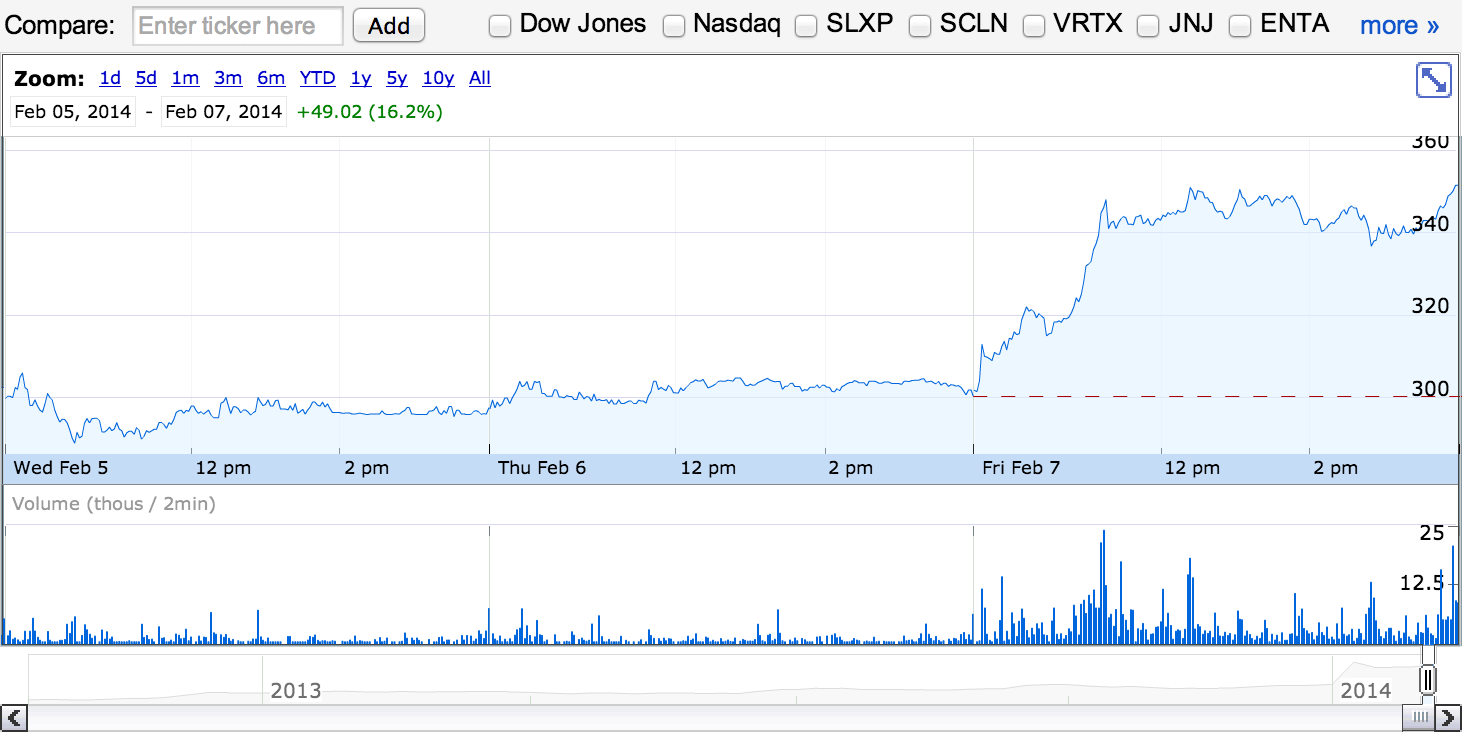
As of February 7, 2014 at 4:00 p.m. Eastern Time, shares of Intercept were trading in the range of $301.03 to $352.80. The average trading volume was 1.22 million shares. Currently, there are 19.34 million shares outstanding and the insiders own approximately 42% of the shares outstanding. Intercept has 53% institutional ownership interest. The market cap for the company is $6.80 billion. During the past 52 weeks, shares of the company traded from $30 to $497.
(click to enlarge)Source: Google Finance
Earlier this week, Intercept issued a press release stating that Doctor Pruzanski, President and CEO, is going to present at the Leerink Global Healthcare Conference in New York on Thursday, February 13, 2014. I recommend investors to attend this event to learn more information regarding Intercept and the company's exciting products-in-development.
NEW YORK, Feb. 5, 2014 (GLOBE NEWSWIRE) -- Intercept Pharmaceuticals, Inc., a clinical stage biopharmaceutical company focused on the development and commercialization of novel bile acid therapeutics to treat chronic liver and intestinal diseases, today announced that Mark Pruzanski, M.D., President and Chief Executive Officer, will present at the Leerink Global Healthcare Conference in New York on Thursday, February 13, 2014 at 2:15 p.m. Eastern Time.
Intercept is a biopharmaceutical company focused on the development and commercialization of novel therapeutics to treat orphan and more prevalent liver and intestinal diseases utilizing its expertise in bile acid chemistry. The company's lead product candidate, obeticholic acid ("OCA"), is a bile acid analog and first-in-class agonist of the farnesoid X receptor ("FXR"). OCA is being developed for a variety of chronic liver diseases including primary biliary cirrhosis ("PBC"), nonalcoholic steatohepatitis, portal hypertension, bile acid diarrhea and primary sclerosing cholangitis ("PSC"). OCA has received orphan drug designation in both the United States and Europe for the treatment of PBC and PSC. Intercept owns worldwide rights to OCA outside of Japan and China, where it has out-licensed the product candidate to Dainippon Sumitomo Pharma. For more information about Intercept, please visit the Company's website at: www.interceptpharma.com.
CONTACT:
Barbara Duncan or Senthil Sundaram
Intercept Pharmaceuticals
1-646-747-1000

Media inquiries: media@interceptpharma.com
Investor inquiries: investors@interceptpharma.com
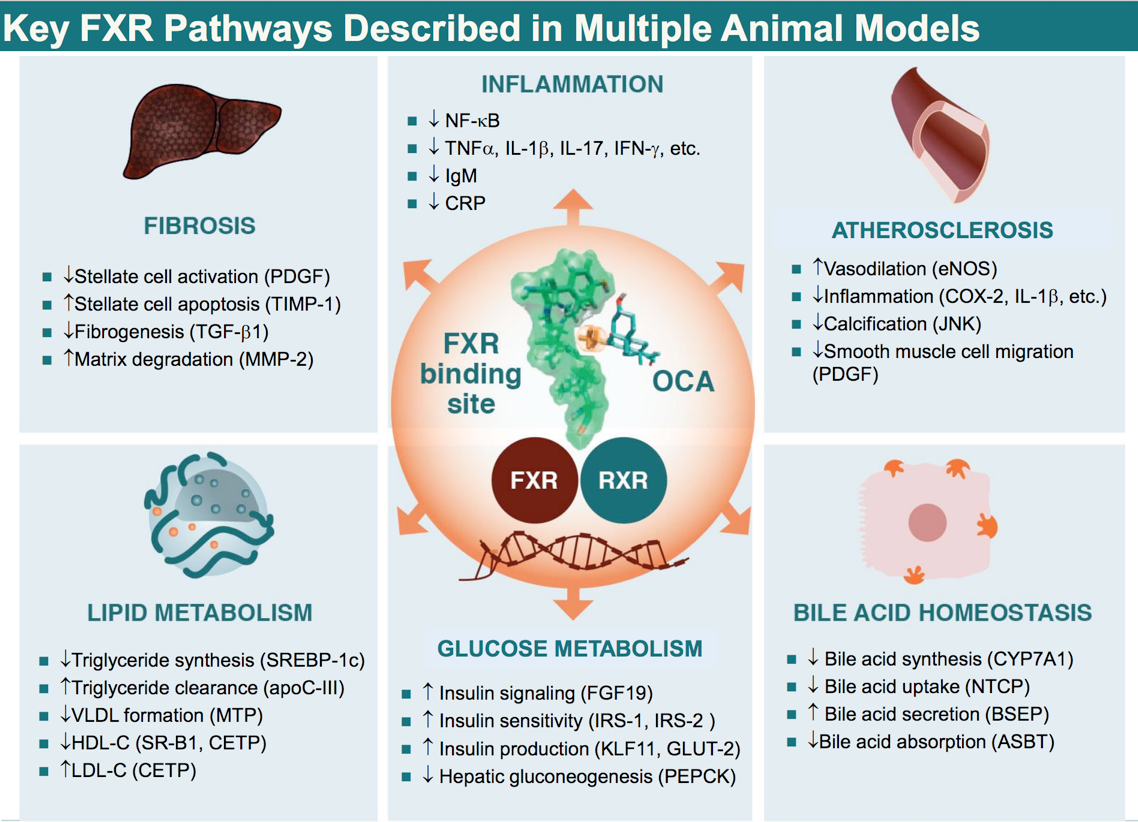
Intercept's lead product (OCA) is a semi-synthetic bile acid that has an ethyl group added to the 6-C position on the molecule. This ingenious chemical modification conferred OCA with 100x potency in activating FXR versus natural bile acid (CDCA). Based on my research, I believe that FXR is the "holy grail receptor" … for the activation of FXR elicits a plethora of key physiologic responses.
(click to enlarge)
Source: Intercept
It is of great interest (for both investors and patients) that the activation of FXR via OCA amplifies the liver's unique regenerative capability by multiple-folds. The liver is an organ that differs from other organs like the heart, because liver tissues have the unique capability to regenerate themselves. I believe that OCA was intelligently designed for the drug has the power to unlock the human body's untapped regenerative power. Hence, this ingenuity was reflected in the early stoppage on the Flint trial. In addition, it would be reflected in the final outcome data (plus the post-marketing data) for NASH in terms of both efficacy and safety.
NASH is a condition affecting nearly 6 million patients in the US. The medical community does not have an exact understanding pertaining to the cause for NASH per se. Approximately 10% of patients suffering from NASH would eventually develop the potentially lethal disease (liver cirrhosis) - A condition that physicians do not currently have any treatment that is both safe and efficacious.
The ultimate treatment, the liver transplant, is not ideal because not all patients could receive the transplant. This is not to mention there are significant adverse effects from taking post-transplant drugs.
Pertaining to Flint, The trial explores the therapeutic indication of OCA in treating NASH. Flint was halted on January 9, 2014 due to the superb results from the interim data. Accordingly, OCA achieved a highly statistical significant p-value of 0.0024, which beat the required threshold p-value of 0.00305 by far. Currently, OCA is in its phase II study and the final outcome data for Flint would be release around September 2014.
In anticipating the future of OCA, many people believed that OCA would need to demonstrate the ability to reverse liver fibrosis to gain the FDA's approval. Contrarily, OCA would only need to achieve the primary outcomes in Flint to receive approval by the Agency per se.
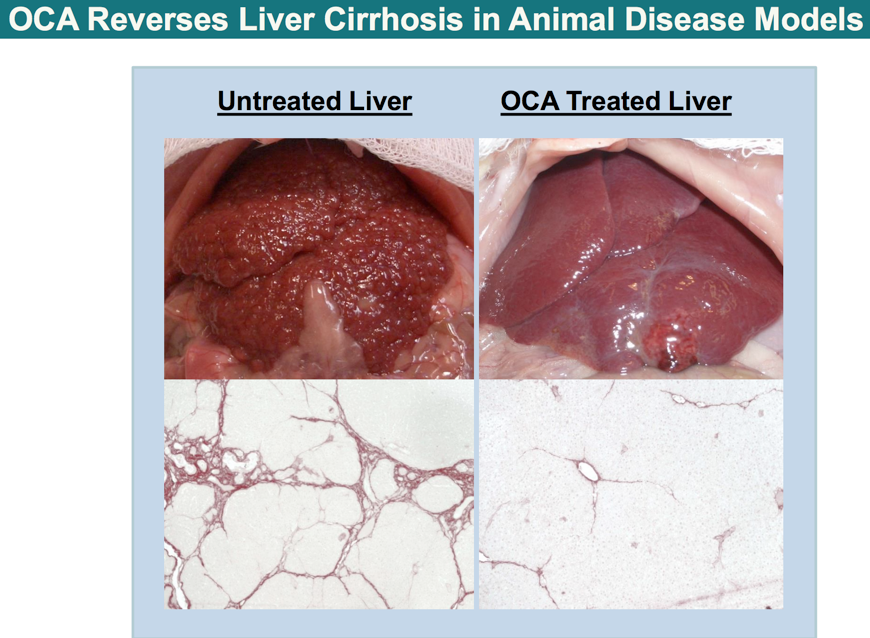
The primary outcome for NASH, based on liver biopsies studies, include (1) stopping the progression of liver fibrosis (2) improving NAFLD Activity Score ("NAS") by at least two points. The threshold for statistical significance pertaining to the final outcome data was set at the p-value of 0.049. Given the fact that OCA posted superb p-value of 0.0024 for the interim data, I am confident that the hurdle set for OCA in the final outcome data is one that could be easily cleared by the drug. In addition, OCA would surprise both the investing/medical communities in its ability to reverse fibrosis… due to its highly potent anti-inflammatory properties.
(click to enlarge)
Source: Intercept
While most attention was drawn to NASH due to the interim results in Flint, I believe that another catalyst deserves equal attention. Accordingly, the data for the POISE trial -currently in phase III studying the indication for OCA in treating primary biliary cirrhosis ("PBC") - would be released around June this year.
In December 2013, the last patient followup visit was completed, marking the conclusion of the doubleblind phase of the POISE trial. POISE has been designed to study the safety and efficacy of OCA in PBC patients with an inadequate therapeutic response to ursodiol or who are unable to tolerate ursodiol. In this trial, eligible PBC patients that were currently taking a stable therapeutic dose of ursodiol continued their ursodiol treatment and were randomized into one of three trial arms of approximately 72 patients each, adding either: 10 mg of OCA; 5 mg of OCA increasing over the course of the trial to 10 mg of OCA; or a placebo. The doubleblind phase of the trial was designed to be 12 months in duration, and patients that completed this phase will continue in an open label, longterm safety extension phase for another five years, during which all patients will receive OCA treatment with doses as low as 5 mg and as high as 25 mg a day, as clinically indicated. Of the 217 patients randomized, 19 patients (approximately 9%) discontinued early, including seven patients (approximately 3%) who did so due to pruritus. Of the 198 patients who completed the doubleblind phase, more than 95% continued in the LTSE phase of the trial. We currently expect results from the trial to be available in the second quarter of 2014.
PBC is a condition characterized by T-lymphocytes attacking the intralobular ducts of the liver, thus causing signs/symptoms of cholestasis. Untreated cases of PBC eventually leads to liver cirrhosis and liver failure. Symptoms of cholestasis include itching, anemia, vitamin deficiency, malabsorption, metabolic bone diseases, and high cholesterol. Though the exact cause of PBC is unknown, it is believed that PBC might be caused by the body immune system attacking itself. According to Intercept,
While PBC is rare, it is the most common cholestatic liver disease. An estimated 90% of patients are women, with approximately one in 1,000 women over the age of 40 afflicted by the disease. The mean age of diagnosis is about 40 years and the typical initial presentation occurs between the ages of 30 and 65 years. In the United States, the disease is the fifth most common cause of liver transplant and accounts for approximately two percent of deaths attributed to cirrhosis. A majority of PBC patients are asymptomatic at the time of initial diagnosis, but most develop symptoms over time. Fatigue and pruritus, or itching, are by far the most common symptoms in PBC patients. Less common symptoms include dry eyes and mouth, as well as jaundice, which can be seen in more advanced disease. Based on the guidelines of the American Association for the Study of Liver Disease, or AASLD, and EASL, the clinical diagnosis of PBC is established based on the presence of (i) a positive antimitochondrial antibody, or AMA, a marker of this autoimmune disease seen in up to 95% of PBC patients, and (ii) elevated serum levels of ALP, an enzyme that is released by liver cells in response to the bile acid mediated toxicity and that is a key biomarker of the disease pathology. ALP is routinely measured in blood tests and, in the earlier stages of PBC, it is often the only abnormally elevated liver enzyme, rising to between two to ten times higher than normal values. It is closely monitored in PBC patients as an indicator of treatment response and prognosis. Bilirubin is a marker of liver function and is also monitored in PBC to provide an indication of how well the liver is functioning. Liver biopsy can be used to confirm the diagnosis of PBC, but is not required and is becoming less frequently performed.
Current treatments for PBC focus on managing symptoms of cholestasis, as well as, barring the destruction of bile ducts inside the liver. In the words of Raoul Poupon, MD, Professor of gastroenterology and hepatology,
The prognosis of patients with PBC has improved greatly during the past two decades because of its diagnosis at earlier stages and the widespread use of ursodeoxycholic acid ("UDCA") treatment. As a result, far fewer patients require liver transplantation, and patients with stages I and II PBC appear to have a normal life expectancy
Ursodeoxycholic acid or UDCA is the only approved drug to treat PBC. UDCA works by breaking up more detergent bile acids into pool. By lowering the increase in bile acids, UDCA is able to effectively alleviate the symptoms associated with PBC like itching...
In contrast to UDCA, OCA reduces the elevated bile acid by a different mechanism. In specific, OCA activates FXR with 100x potency compared to natural bile acid, namely CDCA. I believe that OCA is not only able to displace the detergent bile acids pool, but it also suppresses the inflammation that causes the destruction of the bile ducts in the liver per se. Hence, I believe that in treating any medical condition, it is more effective to nib the disease at its bud rather than to primarily manage symptoms alone.
Given that UDCA is already efficacious in treating PBC (especially its symptoms), I ventured into the unknown to predict that the combination treatment using OCA plus UDCA would be far more beneficial than the treatment solely using UDCA. Furthermore, I speculate that OCA would deliver refreshing news pertaining to the data to-be-released in the upcoming months.

Source: Intercept
Conclusively, there are many short term and longer term catalysts that could levitate or depress the PPS of Intercept Pharmaceuticals. With regards to the closest catalyst, I do not know the specificity that would be discussed at the conference. Nevertheless, I believe that the event would only further educate/inform investors pertaining to the exciting pharmacotherapies at the heart of the company. In my experience of investing in biopharma, I noticed that the PPS tend to move North after such an event due to the accumulating investors' interest in the company.
The bottom line is that if you choose to invest in Intercept, I recommend you to enter your long position before ICPT initiates its next ascent. Unfortunately, I neither guarantee that the PPS would appreciate nor the trials data would turn out stellar. If I could make such promises, investing research would indeed become a perfect science. Investing in biopharmaceuticals entails significant risks versus rewards. It is your responsibility to make that decision based on your level of risk tolerances. Nevertheless, I am here to help you to cut through the maze of biopharmaceuticals investing to the best of my God given abilities. On the final note, if you are an investor in Intercept, you should hold on to your shares for the long term in order to fully profit from this rare opportunity. If I may diverge, I started a group consisted of MD/PhDs to study binary events many years ago. One of the guys in the group bought Jazz Pharmaceuticals at an average PPS below $1. He sold it prematurely for it increased several folds in PPS. Despite such drastic appreciation in shares price, Jazz continued to increase the PPS of $143 as of this writing. My friend had kicked himself in the foot since.
Additional disclosures: I would like to thank a special friend, who is an EM/IM physician. He helped me to understand NASH and to improve my data analysis. This selfless genius had been there for me when I had nothing going on for me in my life. Yet I have not been able to repay him for his help. Without his guidance, as well as, the guidance from my previous colleagues, mentors, bosses, friends, family, and TP, I would not be here today.

Saturday, February 8, 2014

JPMorgan Healthcare Conference 2014: Where To Find Ideas For The Coming Year

JPMorgan Healthcare Conference 2014: Biotechnology Front and Center
By all metrics 2013 was a spectacular year for biotechnology. The NASDAQ Biotechnology Index (investable through the (IBB)) was up 65.6 percent, topping the already impressive S&P 500 total return of 32.4 percent and last year's solid 31.9 percent. The sector also had 42 IPOs, representing more than the last five years combined.
When 2014 started, biotech stocks wasted no time continuing the momentum. On January 9, 2014 Intercept Pharmaceuticals (ICPT) reported that their Phase 2 FLINT trial for nonalcoholic steatohepatitis (NASH) was stopped early for efficacy sending the stock soaring 281 percent, from $72.39 to $275.87.
Therefore as one could imagine, spirits entering JPMorgan's 32nd Annual Healthcare Conference in San Francisco, CA from January 13-16, 2014, could not have been higher.
There were approximately 445 presenting companies, including 38 emerging and 131 private companies. Furthermore, per usual custom, lunch speakers and panels complemented the company specific sessions. Notable speakers included General Michael Hayden, former Director NSA and CIA, Delos "Toby" Cosgrove, MD, CEO and President of Cleveland Clinic and Jamie Dimon, Chairman and CEO of JPMorgan Chase & Co. (JPM).
Consistent with last year's article, the emphasis here will be on the key pieces of information gained from the conference. This data is meant to capture the thinking of the biggest investment managers and serve as a supplement to publicly available materials. Here are themes that developed from attending 24 presentations and 23 breakout sessions:
  1. Right in Front of Your Eyes
  2. Worth the Wait?
  3. Emerging Healthcare Celebrities
Right in Front of Your Eyes:
With so many companies presenting and releasing fresh news it can be hard to stand out. Every half hour investors diligently move from one meeting to another, gathering as much information as possible in this short amount of time. Even when a company is well known, hyped, and/or loved by all it can still be easily passed over. The cynical voice inside us often says, "To achieve 65.6 percent plus returns requires searching through every nook and cranny. If a company is widely recognized there are no valuable nuggets of information left to find." But here's a little secret. In 2013, had an investor held an equal weighting of the top four U.S. biotech companies by market cap, Amgen (AMGN), Biogen (BIIB), Celgene (CELG) and Gilead (GILD), the portfolio would have returned 86.4 percent and topped the NASDAQ Biotechnology Index.
So the next time the "already missed it" or "everyone knows it" thought pops into your head, it might warrant a second look. There are often good reasons why certain companies are in the limelight. Don't let that be a deterrent to due diligence, as ignoring what is right in front of your eyes could be a lost opportunity.
The candidates are:
Celgene
Market Cap: $61.9bn
Consensus 2014E Revenues: $7.6bn (+16.7 percent y/y)
Consensus 2014E EPS: $7.30 (+22.5 percent y/y)
Key Products: Revlimid for multiple myeloma, del 5q myelodysplastic syndrome and mantle cell lymphoma, Abraxane for metastatic pancreatic, metastatic breast and non-small cell lung cancer, Pomalystfor multiple myeloma and Otezla for psoriatic arthritis and psoriasis (pending 2014 FDA approval).
Company Background:
  • Revlimid, the company's lead product, had 2013 sales of $4.3bn representing +14 percent y/y and 66 percent of total company revenues.
  • Abraxane had 2013 sales of $649mm representing +52 percent y/y led by 2H 2013 U.S. and EU approval for metastatic pancreatic cancer.
  • Otezla expected to be approved for psoriatic arthritis in Q1 2014 and psoriasis in Q3 2014
  • More than 30 Phase 3 trials underway or to be designed in 2014.
  • Raised 2017 sales and EPS guidance from $12bn+ to $13-14bn and $13.00-14.00 to $15.00, respectively
  • $2.1bn left on share repurchase agreement.
Conclusion: In 2009, the company made its debut as the opening act for the JPMorgan Healthcare Conference. Fast forward five years, the company (now 3x larger on a revenue basis and the stock up 200 percent) still packed them in first thing on a Monday morning. If it is not obvious by now, JPMorgan has been accurately shouting, "pay attention to this one" for some time.
Nonetheless, investors have come to expect repeated success with CELG, almost to the extent that the company has become "uninteresting." This year when CELG increased 2017E revenues and EPS by 10 percent from the prior year the reaction was rather lackluster -- the stock has slowly trickled down 11 percent since. However, this jaded attitude may be misguided. A four year CAGR for revenues and EPS of 21 percent and 26 percent, respectively, is far from boring. This guidance also only takes into consideration Celgene's existing and pending therapies (Phase 3 completed), and not the new drugs that could come from the greater than 30 Phase 3 studies underway or to be planned in 2014. CELG also has $2.1bn left in its stock repurchase plan after purchasing more than $2.8bn in 2013. Overall, it appears that Celgene's management has given themselves room for further upside and that the raises to 2017E revenues and EPS are probably just starting.
Intercept Pharmaceuticals
Market Cap: $5.8bn
Consensus 2014E Revenues: $6mm (+162 percent y/y)
Consensus 2014E EPS: -$2.59
Key Product: Obeticholic Acid (OCA) for primary biliary cirrhosis, nonalcoholic steatohepatitis, portal hypertension and bile acid diarrhea.
Company Background:
  • OCA, the company's lead product, is a modified version of naturally occurring bile acid with 100x more potency on the farnesoid X receptor, or FXR.
  • Phase 3 POISE topline results for primary biliary cirrhosis expected 2Q 2014. Given that the Phase 3 trial design is very similar to the Phase 2 trial, management expectations are high.
  • Jan 2014 reported Phase 2 FLINT trial for NASH stopped early for efficacy based on improvement in liver histology. Of note there was some talk regarding accelerated approval in Sept. 2013 at a joint FDA/AASLD NASH clinical endpoints workshop.
  • Phase 2b for portal hypertension and bile acid diarrhea to begin in 2H 2014.
  • 43 percent of shares held by insiders.
  • $157mm in cash and cash equivalents as of Sept. 2013.
Conclusion: It's not every day that a stock (even in biotech) jumps 281 percent in hours and maintains that level. If an investor was uncertain of the movement's cause, attending Intercept's Wednesday 7:30am presentation and its line-out-the-door breakout session made it very clear. Before January 9, OCA's prospects were highly dependent upon its Phase 3 trial for primary biliary cirrhosis. With the early stoppage of its Phase 2 FLINT trial, OCA showed itself to be potentially effective in not just one, but two liver diseases. It was a boon for a company with no revenue or other therapies in late stage development. Intercept's lead product had been significantly de-risked, and it is looking more and more like management's big bet on activating FXR to cure liver diseases could work out in a big way. With OCA already showing effectiveness in late stage trials for two liver indications, perhaps it would also work in ICPT's two other pending Phase 2 trials. Promoting liver regeneration (what activation of FXR does) may just be the secret sauce to curing most liver illnesses.
The meteoric rise from $72.39 to $275.87 in one day was not an accident. Behind this hoopla is a company that has a strong probability of having Obeticholic Acid FDA approved for two high unmet medical indications by 2015, which may result in one of the strongest liver therapy franchises in biotech.
Worth the Wait?:
After a year where the NASDAQ Biotechnology Index was up 65.6 percent optimism is certainly still high. The question investors are asking is, "what can the sector do for an encore?" The easiest answer is for hardcore biotech investors to do what they have always done -- look for the next big winners. And fortunately, in this industry the "potential" homeruns are often easy to identify because they are usually companies associated with known binary events like the announcement of clinical trial data or FDA approval. The difficult part is trying to accurately predict the result of one of those binary events. Of course this is no easy task and even those with advanced medical degrees still struggle to deliver consistent prognostications. Nevertheless, in this game where it is difficult to gain an edge, many continue to play and are not deterred by the possibility of losing 50-80 percent of their capital as long as the potential upside is double or triple that. So true to the culture of biotechnology investing, let's see what is in on the radar for 2014.
The candidates are:
InterMune (ITMN)
Market Cap: $954mm
Consensus 2014E Revenues: $136mm (+97 percent y/y)
Consensus 2014E EPS: -$2.35
Key Product: Esbriet (generic name pirfenidone) for idiopathic pulmonary fibrosis (IPF) -- $33,000-45,000/year in EU and Canada.
Company Background:
  • Esbriet is the only approved medicine for IPF in the EU and Canada, and the U.S. has none approved.
  • Esbriet is listed as standard of care in seven European countries for IPF, and has been launched in 13 of 15 target European countries.
  • Nov 2009 submitted pirfenidone NDA for FDA approval. In May 2010 received complete response letter requesting an additional clinical trial despite FDA advisory panel voting 9-3 in favor.
  • Phase 3 ASCEND trial results expected 2Q 2014. To date, patient retention rate is more than 90 percent and over 90 percent of eligible patients have rolled over into RECAP, the open-label follow up study.
  • Daniel Welch, Chairman and CEO has also been very open about his belief that ASCEND has a high probability of success.
Conclusion: About four years ago expectations were very high for InterMune. Those hopes were then quickly dashed with FDA rejection. The stock (currently more than 75 percent below those highs) and optimism still have not recovered. This time investors are not so quick to follow Mr. Welch, and seeing him defend pirfenidone and the ASCEND trial design has become an everyday occurrence. Short interest is high and questions regarding competition from Boehringer Ingelheim GmbH persist.
Nonetheless, ITMN spoke to a jam-packed room. Despite all the negativity the company still has a chance to return to glory, and therefore investors want to be ready to take action if and when the tide turns. Key data necessary for U.S. approval of pirfenidone is just a few months away. If ASCEND turns out as Mr. Welch predicts pirfenidone's market opportunity could triple -- Esbriet is selling well in Europe, and the U.S. patient pool equals Europe's but pricing would likely be double.
Vertex Pharmaceuticals (VRTX)
Market Cap: $18.1bn
Consensus 2014E Revenues: $592mm (-51 percent y/y)
Consensus 2014E EPS: -$2.33
Key Products: Kalydeco for cystic fibrosis (CF) -- $294,000/year andIncivek for hepatitis C.
Company Background:
  • Kalydeco is the only approved medicine to treat the root cause of cystic fibrosis. It is approved for patients with the G551D mutation age 6 and older, which equates to a little over 2,000 patients.
  • Potential to submit Kalydeco sNDA for patients with R117H mutation age 18 and older.
  • VX-809, a CFTR corrector in Phase 3 for patients with F508del mutation. Data from TRAFFIC and TRANSPORT studies to be reported in mid-2014.
  • VX-661, a CFTR corrector planned for Phase 3 for patients with F508del mutation.
  • Nov 2013 sold Incivo (called Incivek in U.S.) product royalty rights for $152mm.
Conclusion: At the end of Mar 2012, Vertex had just finished the most successful drug launch in history -- selling $1.3bn of Incivek (at the time considered a revolutionary treatment for hepatitis C) in its first year. Yet, six months later investors were already anticipating competition, which sent the stock down 50 percent. Fortunately, the company also had a budding CF franchise, and with the release of VX-809 Phase 2 results the stock recovered 100 percent from its lows by mid-2012. Since then the stock has continued to be volatile, exhibiting four 30 percent plus up and down moves.
The explanation for these wild swings is that VRTX is predominantly a niche company treating less than five percent of CF patients. Its stock is largely affected by investors' belief of whether the company can become more than this. VX-809 and VX-661 are two therapies that have shown promise in early stage studies to treat cystic fibrosis F508del homozygous patients. If either are successful, the number of patients eligible for Vertex's medication would expand to 30,000, thereby increasing the company's market opportunity by 14x. Given the magnitude of stock price changes from the previously announced Phase 2 results involving VX-809 and VX-661 to date, it is almost certain that investors are gearing up for another one when VX-809 Phase 3 results are released in mid-2014.
Emerging Healthcare Celebrities:
In many sectors of the economy it is common for there to be someone the broader public typically associates as a foremost expert of that specific field. In alternative energy it is Elon Musk, CEO of Tesla (TSLA), in banking it is Jamie Dimon, in industrials it is Jack Welch, former Chairman and CEO of General Electric (GE), in investing it is Warren Buffett, CEO of Berkshire Hathaway (BRK.A), and in technology it was Bill Gates, founder of Microsoft (MSFT), then the late, Steve Jobs, founder, chairman and CEO of Apple (AAPL) and now Mark Zuckerberg, founder, chairman and CEO of Facebook (FB).
For all the good that biotechnology and the healthcare sector at large have contributed to the economy and society, the industry has continually lacked a public champion. Biotech and pharmaceuticals particularly have been viewed as an esoteric field only to be understood by medical doctors, PhDs and scientists.
Times are changing though. Medicine is becoming more consumer oriented. Drug companies are marketing to potential customers directly, the web and personal technology devices are helping individuals take care of themselves, and providers are introducing services to enhance the patient experience. As a result, healthcare companies and their CEOs are gaining recognition. But it takes more than success and prominence to become the voice of an industry. Leaders need to be evangelists for their visions and products, creating hope and inspiration and in the process build a cult-like following.
Big changes have been happening in healthcare whether through science, technology or regulation. With change breeds opportunity and thus new individuals to lead the way.
The candidates are:
athenahealth (ATHN)
Market Cap: $5.3bn
Consensus 2014E Revenues: $744mm (26 percent y/y)
Consensus 2014E EPS: $1.04 (1 percent y/y)
Key Products: Cloud-based services for electronic health records, physician practice management, patient communication, care coordination and network insight -- athenaClinicals, athenaCollector, athenaCommunicator, athenaCoordinator, athenaClarity and Epocrates.
Company Background:
  • Led by Jonathan Bush, Co-Founder, Chairman and CEO.
  • Most popular product is athenaCollector. Used by > 47,000 providers representing about five percent market share.
  • Jan 2014 announced three new large customers (defined by > 75 physicians), including Medical Professional Services, one of Connecticut's largest multi-specialty Independent Physician Associations with over 450 physicians.
  • Physician awareness of the company rose from 31 percent in 2012 to 39 percent in 2013.
  • Awarded 2013 Best in KLAS #1 Overall Software Vendor, displacing Epic, the previous #1 of the last eight years. KLAS is an independent medical technology research company that measures vendor performance.
Conclusion: There is no bigger champion for improving healthcare through technology than Jonathan Bush. He has been described as, "more passionate than perhaps any executive I've ever run across," and "the provocateur of healthcare IT". But his outspoken nature and company's successes could only carry ATHN so far. At the end of 2012 athenahealth was still a niche electronic medical records company catering to small physician groups. If the company was to change the industry from its high cost, archaic technology to a more nimble architecture it would ultimately have to challenge health IT's two largest players, Epic and Cerner (CERN). Last January Mr. Bush and Co. set out to make this happen. ATHN bought Epocrates and its 340,000 physician customers (roughly half of the doctors in the U.S.) to address the company's biggest weakness -name recognition.
The early results are promising. In 2013 physician awareness improved 25 percent and large customer wins followed. This has emboldened investors to believe that ATHN's business model of moving from small physician groups to large practices and later to enterprises (hospitals) is proving out. By moving up market, the company would be able to sustain its sector leading 20 to 30 percent long-term revenue growth rate, and as a result, the stock is up more than 60 percent since the Epocrates acquisition announcement.
Jonathan Bush is aware of the expertise and execution necessary to supplant the incumbents. He speaks fondly of how much easier it is to implement and use ATHN's solutions and revels for the day where the phrase, "no hospital CIO ever got fired for choosing Epic" ceases to exist. Recently the company unseated Epic for the #1 slot for 'Best in KLAS Overall Software Vendor' and has stated plans to be enterprise ready within 2 years. Jonathan and athenahealth's dream may soon come true.
Intrexon (XON)
Market Cap: $3.0bn
Consensus 2014E Revenues: $59mm (+129 percent y/y)
Consensus 2014E EPS: -$0.29
Key Products: Synthetic biology tools - UltraVectorRheoSwitchCell Systems InformaticsLaser-Enabled Analysis and Processing, andmAbLogix.
Company Background:
  • Led by Randal J. Kirk, CEO and Chairman. Also, Founder and CEO of Third Security, LLC, former Chairman of Clinical Data (acquired by Forest Laboratories (FRX) for $1.2bn) and former Chairman of New River Pharmaceuticals (acquired by Shire (SHPG) for $2.6bn).
  • Provide companies with proprietary synthetic biology technology to enable the development of new or improved products in health, food, energy and environment on an industrial scale. Partners are responsible for product development, marketing, sales and regulatory approvals.
  • Revenues generated through exclusive channel collaborations, or ECCs. ECCs often include technology access fees, equity ownership, cost reimbursements, milestone payments and/or royalties.
  • Notable collaborations: AquaBounty's AquAdvantage Salmon, Johnson & Johnson's (JNJ) consumer division for development of skin and hair products.
  • IPO Aug 2013.
  • Approximately 60 percent insider ownership.
  • $279mm in cash and cash equivalents as of Sep 2013 with stated goal of turning EBITDA positive by 4Q 2014.
Conclusion: According to Sand Hill Econometrics, only about six percent of venture capital exits since 2003 are IPOs and 26 percent profitable acquisitions. Even more rare is the CEO and/or Chairman that is able to repeat any of these two feats. R.J. Kirk is that guy, having a hand in three multi-billion dollar acquisitions and two IPOs, including his current company, Intrexon. In Feb 2011 Forbes wrote an article, "Is Randal J. Kirk Biotech's Best Investor?" It goes without saying that Mr. Kirk has built a substantial following, similar to that of Warren Buffett or Carl Icahn, Chairman of Icahn Enterprises L.P (IEP). Professional and retail investors have come to expect nothing but greatness.
Intrexon represents Mr. Kirk's biggest venture to date as he has already invested more than $300mm of his own capital. It is his belief that for the human race to not run out of resources, genetically modified products need to be present in Monsanto's (MON) corn and soybean seeds, as well as in live animals, energy sources, daily consumables, etc. If XON is successful, given that Monsanto is currently a $15bn revenue company in agriculture alone, investors can easily understand the company's very large market opportunity. Still, with only one commercial product using the company's technology (AquaBounty salmon eggs approved in Canada) XON is still a concept stock. However, given Mr. Kirk's devout fan base this is one situation where fundamentals, numbers and valuation have little bearing. XON will get a free pass in the short-term on the belief that R.J. will make synthetic biology a reality. Modifying genes in order to create better products such as GMOs and medical therapies has already made its way into society in small amounts. The big unknown is whether society is ready to adopt more of these types of products; note General Mills (GIS) recently announced that Cheerioswould be GMO-free.
Closing Thought: As investors continue to remain skittish regarding the global economy, healthcare should remain a prime focus in 2014. More specifically, the biotechnology industry with its relentless focus on innovation has built a strong foundation for the long-term. The emphasis on more targeted therapies has increased efficacy, and what were once considered "pie in the sky" theories are moving closer to reality. Who knew that when Provenge by Dendreon (DNDN) became the first ever immunotherapy to be approved by the FDA in April 2010 that this was just the beginning of a huge technological wave. Now large amounts of capital are investing in gene therapy and RNAi. For example, on January 13, 2014 Sanofi (SNY) announced a $700mm investment in Alnylam Pharmaceuticals (ALNY), a leader in RNAi therapeutics.
2013's biotechnology stock performance was not an aberration, but a signal of more great innovations to come.